


Edited by Keith Ngan MRPharmS
Modern eating habits have changed dramatically over the past few decades. While food is more accessible and convenient than ever before, nutritional density has not always kept pace. As visual demands increase in a digital world, there is growing interest in vision nutrition and whether the modern diet provides enough nutrients for eye health to support long-term comfort and resilience.
Understanding what may be missing from today’s food patterns helps explain why targeted nutritional strategies are receiving renewed attention.
Soil depletion and nutrient density
One important but often overlooked factor in modern nutrition is soil depletion. Intensive farming practices over time can reduce mineral concentrations in agricultural soil. Although food production methods continue to improve, historical comparisons suggest that certain fruits and vegetables may contain lower concentrations of some vitamins and minerals than in previous generations.
This does not mean modern produce lacks value. However, it highlights that vision nutrition depends not only on eating enough food, but on consuming nutrient-dense food. Micronutrients such as zinc and selenium contribute to cellular protection within the eye, and their availability begins at soil level.
When nutrient density varies, dietary intake may not always provide consistent levels of nutrients for eye health, particularly for individuals with limited food variety.
Reduced intake of carotenoids
Carotenoids are plant compounds that play a crucial protective role in eye tissues. Lutein and zeaxanthin are especially important because they concentrate in the macula, where they help filter light and support central vision.
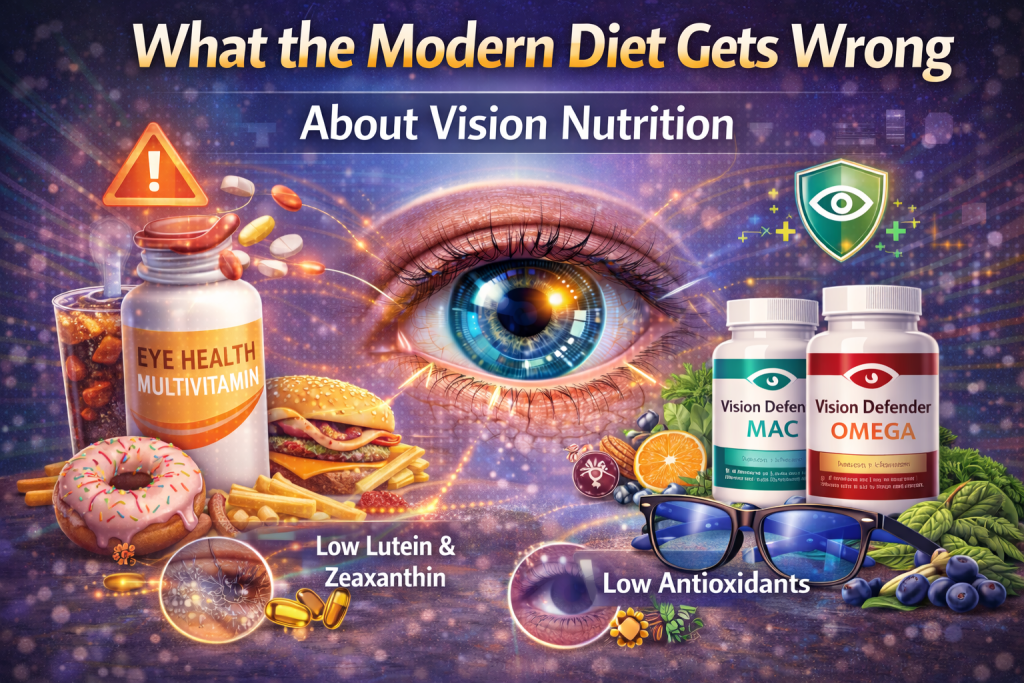
Despite their importance, intake of dark leafy greens remains lower than recommended for many people. Convenience meals and processed foods often displace nutrient-rich vegetables in daily routines. This can lead to lower consumption of lutein and zeaxanthin, which are key components of effective vision nutrition.
Over time, reduced intake of these carotenoids may influence how well the macula copes with oxidative stress. Some research suggests that adequate carotenoid intake may help reduce the risk of age-related macular degeneration, particularly when combined with other supportive nutrients.
The shift toward processed foods
Modern lifestyles prioritise speed. Highly processed foods are widely available and convenient, but they often lack the diversity of vitamins, minerals and phytonutrients found in whole foods.
Even individuals who aim to eat well may consume fewer fresh fruits and vegetables than intended. This can affect overall nutrient diversity, including nutrients for eye health such as vitamin C, vitamin E and certain B vitamins.
Many people also underestimate the importance of consistent intake. For example, vitamin A is widely recognised for its role in maintaining healthy vision, yet some individuals may not regularly consume a reliable source of vitamin A through diet alone.
Increased visual demand
At the same time that dietary patterns have shifted, visual demand has intensified. Screens are central to work, education and leisure. Prolonged exposure to artificial light, digital glare and sustained focus increases the workload placed on the eyes.
The retina is metabolically active and sensitive to oxidative stress. As screen use becomes more embedded in daily life, the need for protective nutrients may increase. This makes vision nutrition particularly relevant in modern environments.
While lifestyle adjustments are important, nutritional support may also contribute to maintaining comfortable vision over the long term.
Nutrients for eye health and long-term resilience
The eyes rely on a consistent supply of vitamins, minerals and fatty acids to maintain structural integrity and function. Nutrients for eye health contribute to tear stability, retinal support, nerve signalling and cellular protection.
Omega fatty acids, for example, are associated with supporting tear quality and may benefit individuals experiencing dry eye symptoms linked to environmental exposure or prolonged screen use. Antioxidant nutrients help neutralise free radicals generated by light and metabolic processes.
These nutrients work together in synergy. A diet lacking in variety may limit that synergy, even if calorie intake appears sufficient.
The gap between recommendations and reality
Public health advice consistently encourages a balanced diet rich in whole foods. However, busy schedules, rising food costs and limited access to fresh produce can make adherence challenging.
Even people who prioritise health may struggle to maintain a consistent intake of leafy greens, oily fish and coloured produce. This gap between dietary recommendations and real-world habits reinforces why vision nutrition deserves specific attention.
Supporting eye health is not only about avoiding deficiency but about sustaining a protective balance over time.
Why supplementation may fill modern gaps
Supplementation is not a replacement for a healthy, balanced diet. However, it may help address nutritional gaps that arise from modern eating habits.
Targeted supplementation can provide nutrients for eye health at levels designed to complement dietary intake. This may be particularly helpful for nutrients that are commonly under-consumed, such as carotenoids and certain fatty acids.
High-quality formulations focus on bioavailability rather than simply increasing ingredient quantity. This means considering how nutrients are absorbed and utilised within the body.
When used appropriately, supplementation may support vision nutrition in a structured and consistent way, especially where diet alone may not meet optimal intake levels.
Long-term thinking and eye health
Eye health reflects cumulative patterns of lifestyle, environment and nutrition. Conditions such as age-related macular degeneration develop over time and are influenced by multiple factors, including genetics and overall health status.
Maintaining a consistent intake of protective nutrients may help reduce the risk of long-term deterioration by supporting cellular defence systems. While no supplement can guarantee the prevention of eye diseases, a sustained nutritional approach contributes to overall resilience.
This perspective shifts the conversation away from short-term fixes and toward long-term support.
Rebalancing modern vision nutrition
Improving vision nutrition does not require extreme dietary changes. Increasing intake of leafy greens, coloured fruits and vegetables, nuts and oily fish supports a stronger nutritional foundation.
Small, sustainable adjustments often have a greater long-term impact than drastic short-term changes. When combined with targeted supplementation where appropriate, this approach helps create a balanced and realistic strategy for maintaining eye health.
Final thoughts
Modern dietary patterns, soil changes and increased screen exposure have altered the nutritional landscape in ways that directly affect eye health. Reduced intake of carotenoids such as lutein and zeaxanthin, combined with greater visual demand, highlights why vision nutrition is increasingly relevant.
Supporting nutrients for eye health is not simply about addressing deficiency, but about maintaining balance and resilience over time. By recognising potential gaps in the modern diet and taking informed steps to address them, individuals can better support long-term visual wellbeing.
At Vision Defender, we believe science-led vision nutrition plays an important role in protecting everyday eye health. By combining a healthy, balanced diet with targeted nutritional support, it becomes easier to maintain visual comfort in a visually demanding world.
If you would like to explore supplements designed to complement modern vision nutrition, discover Vision Defender’s range of evidence-informed formulations developed to support long-term eye health.